About
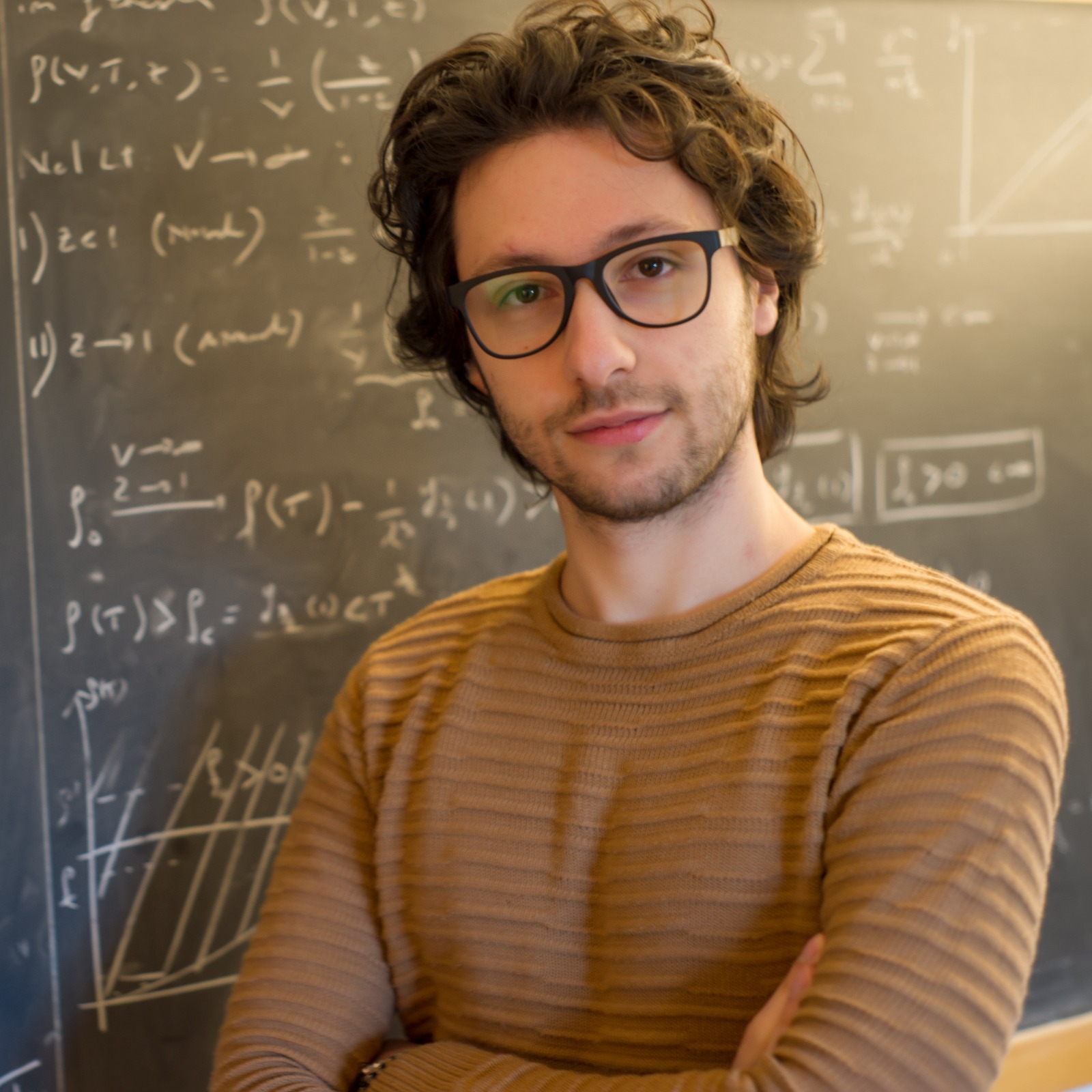
I have always been drawn to the meeting point between the rigour and clarity of theoretical physics and the pragmatism of experimental physics, and this is what got me hooked on computational physics from my very first years of study.
Among these computer “experiments”, which use theory to produce results that can be compared directly with measurements, solid-state physics is for me the most fascinating branch and the richest in applications. This led me into the deep world of ab initio calculations, of high-throughput automation for the discovery of new materials, and of machine learning for the development, prediction and design of new materials.
Research
Machine learning Wannier-function properties for functional materials: from piezoelectricity to superconductors
Interests
Ab initio electronic structure
Density-functional theory calculations of materials properties.
Code design, automation and optimization
High-throughput workflows for materials discovery, built on the AiiDA ecosystem.
Neural networks for materials modelling
Equivariant graph neural networks, machine-learned interatomic potentials and total-energy models.
Molecular dynamics
Ab initio and classical simulations of materials and interfaces.
Geometry and topology of electronic structure
Wannier functions, Berry phases and electric polarization.
Work
In preparation
- A universal diffusion model for the quantum position operator
- Automated all-functional piezoelectric tensor without supercell
Theses and reports
-
2024
Drag properties of graphene coatings: atomistic simulations
PDF -
2022
Development of an interatomic potential based on deep neural networks for single layers of tungsten ditelluride
PDF
Posters
-
2026
Equivariant machine learning of Berry-phase polarization
PDF -
2025
Slip properties of graphene–water interfaces: atomistic simulations
PDF -
2022
Development of a DeepMD potential for monolayer WTe2
PDF
Tutorials
-
2026
Berry-phase electric polarization with Quantum ESPRESSO
GitHub -
2026
Automated active learning of a neural-network interatomic potential with AiiDA-TrainsPot
Education
-
PhD in Theory and Numerical Simulation of Condensed Matter
-
Master’s degree in Physics, 110/110 cum laude
-
Bachelor’s degree in Physics
Skills
Programming
- Python
- Fortran
- C
- f2py
- Mathematica
Simulation codes
- Quantum ESPRESSO
- AiiDA
- LAMMPS
- DeePMD
- NequIP
- OVITO
High-performance computing
- CINECA Leonardo
- Marconi100
Languages
- Italian (native)
- English
Contact
rdalmoli [at] sissa.it
Office
Room 407, SISSA
Via Bonomea 265
34136 Trieste, Italy