Research Frontiers
The research vision of the Rozza Group has progressively evolved towards a broader framework for real-time and data-enhanced computational modeling, in which digital twins emerge as the point of convergence of the different research lines developed by the group.
Certified Reduced Basis Methods for Parametrized PDEs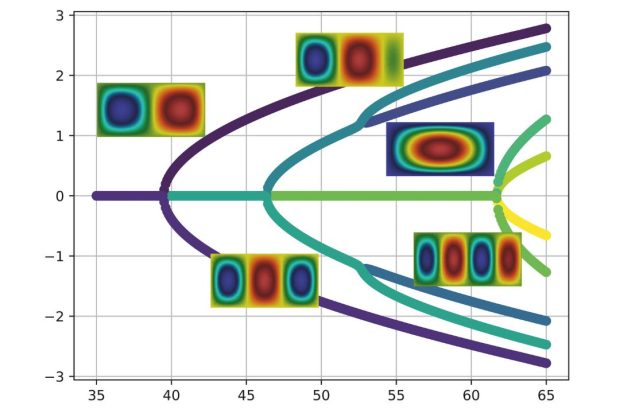
The Rozza Group has developed several theoretical and methodological contributions in the area of certified reduced basis methods for parametrized partial differential equations. A wide range of problems have been investigated, including fluid dynamics, transport equations, geometrically parametrized domains, multi-physics systems, time-dependent systems and bifurcation problems. Particular attention has been devoted to greedy algorithms, non-affine problems, stability issues, bifurcation analysis, and the efficient offline-online decomposition required for real-time and many-query applications; these approaches are typically combined with rigorous a posteriori error estimation procedures.
Reduced Order Modeling for Computational Fluid Dynamics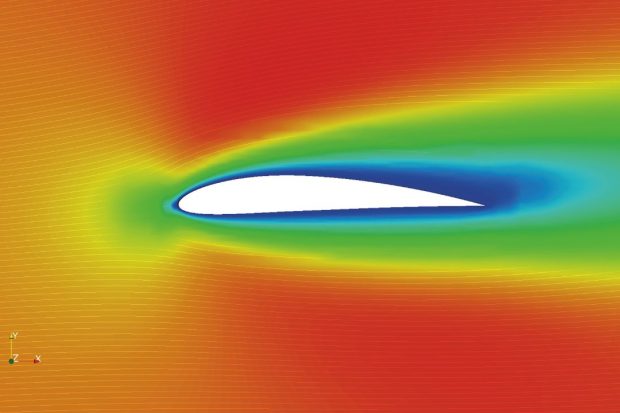
The group has made significant contributions to the development of advanced reduced order modeling techniques for computational fluid dynamics, with a focus on industrial and biomedical applications. A significant part of this work concerns multi-parameter and high-dimensional flow problems, as well as complex fluid phenomena such as turbulent, multi-phase, convection-dominated, and strongly nonlinear regimes. Many of the methodologies developed by the group are based on Proper Orthogonal Decomposition (POD), including approaches such as POD-Galerkin and POD-Greedy. Particular attention has also been devoted to stabilization techniques for incompressible flows and pressure-velocity coupling.
Data-Enhanced and Multi-Fidelity Reduced Models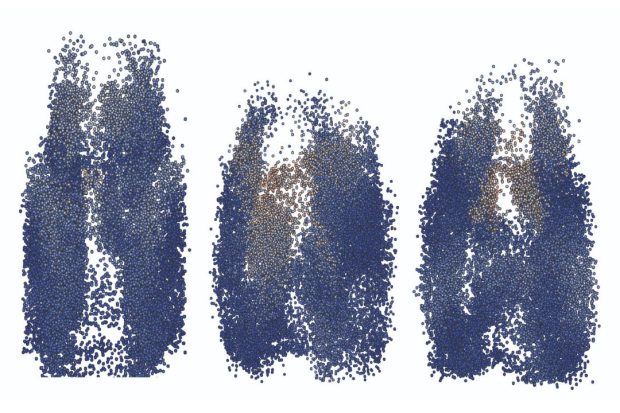
Data-driven surrogate models are investigated in contexts where standard projection-based approaches become difficult to apply. Our group studies probabilistic and data-driven approaches such as Gaussian Processes for surrogate modeling with uncertainty estimation, as well as Dynamic Mode Decomposition for the identification of dominant structures and time-dependent patterns in complex systems. The group also investigates multi-fidelity strategies in which low-order, reduced, and high-fidelity models are combined to improve predictive capabilities while controlling computational costs, with particular attention devoted to residual learning strategies.
Scientific Machine Learning and Physics-Based AI
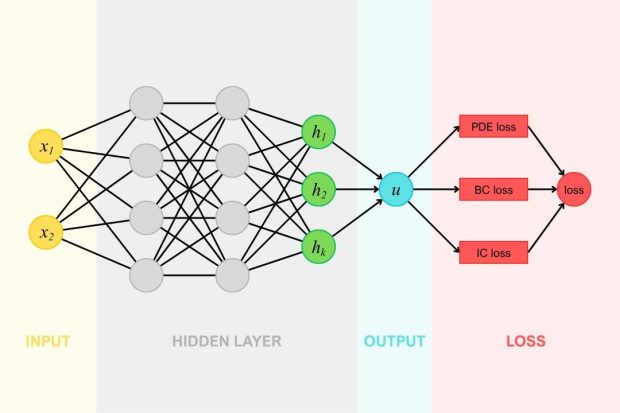
Over the course of the years, the Rozza Group has built a strong research line focused on the convergence between physical models and machine learning, especially in contexts where data are scarce, geometries are complex, or parameter spaces are very large. This includes Physics-Informed Neural Networks (PINNs), which integrate physical constraints directly into the learning process, as well as operator learning techniques such as DeepONets, which learn mappings between functional inputs and outputs.
Geometrical Parametrization and Shape Optimization
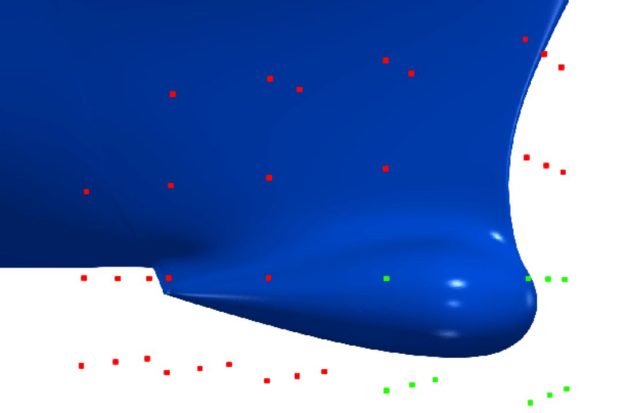
Our group has developed several methodological contributions in the area of geometrical parametrization and shape optimization for parametrized partial differential equations. The main areas of interest include contexts in which the shape of the computational domain strongly affects the solution, as well as high-dimensional parametric settings such as inverse problems. Parametrization techniques investigated by our group are based on free-form deformation, radial basis functions, and mesh motion strategies, with applications ranging from biomedical geometries to industrial design problems.
Image reproduced under permission of the authors. Source: arxiv.org/abs/1801.06369
Uncertainty Quantification and Stochastic Reduced Models
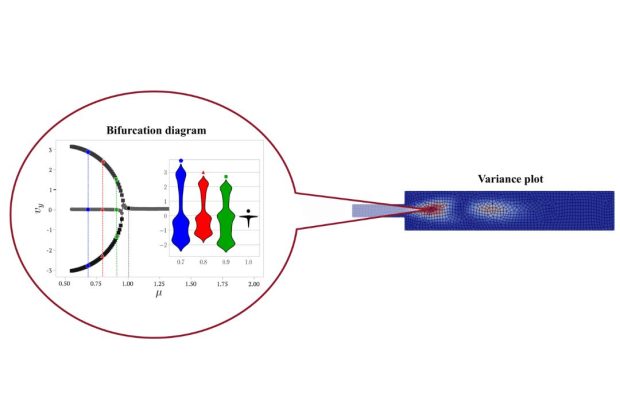
The treatment of parametrized problems with uncertain inputs, random parameters and stochastic variability is particularly relevant in many-query contexts, where uncertainty propagation and stochastic analyses would otherwise require a prohibitively large number of high-fidelity simulations. The Rozza Group has worked on the integration of uncertainty quantification techniques with reduced order modeling, and in particular with reduced basis methods, with a focus on stochastic collocation, Bayesian inversion, optimal control under uncertainty and sensitivity analysis.
Image reproduced under permission of the authors. Source: arxiv.org/abs/2402.16803